Moss, Nature's Forgotten Hero
Ecology, Biology, and Community

We reside on a gorgeous, rare planet, a precious, polished jewel of lapis lazuli suspended in space. As I walk the stone path to my doorway, I notice the moss trying to outline the stones in a rich velvety green. I stand there admiring its stunning beauty, but my mind can't help but ruminate on the violent dissonance of our species. While this ancient emerald-green cloak has survived for 450 million years and silently witnessed mass extinction after mass extinction. The modern world seems intent on engineering another one.
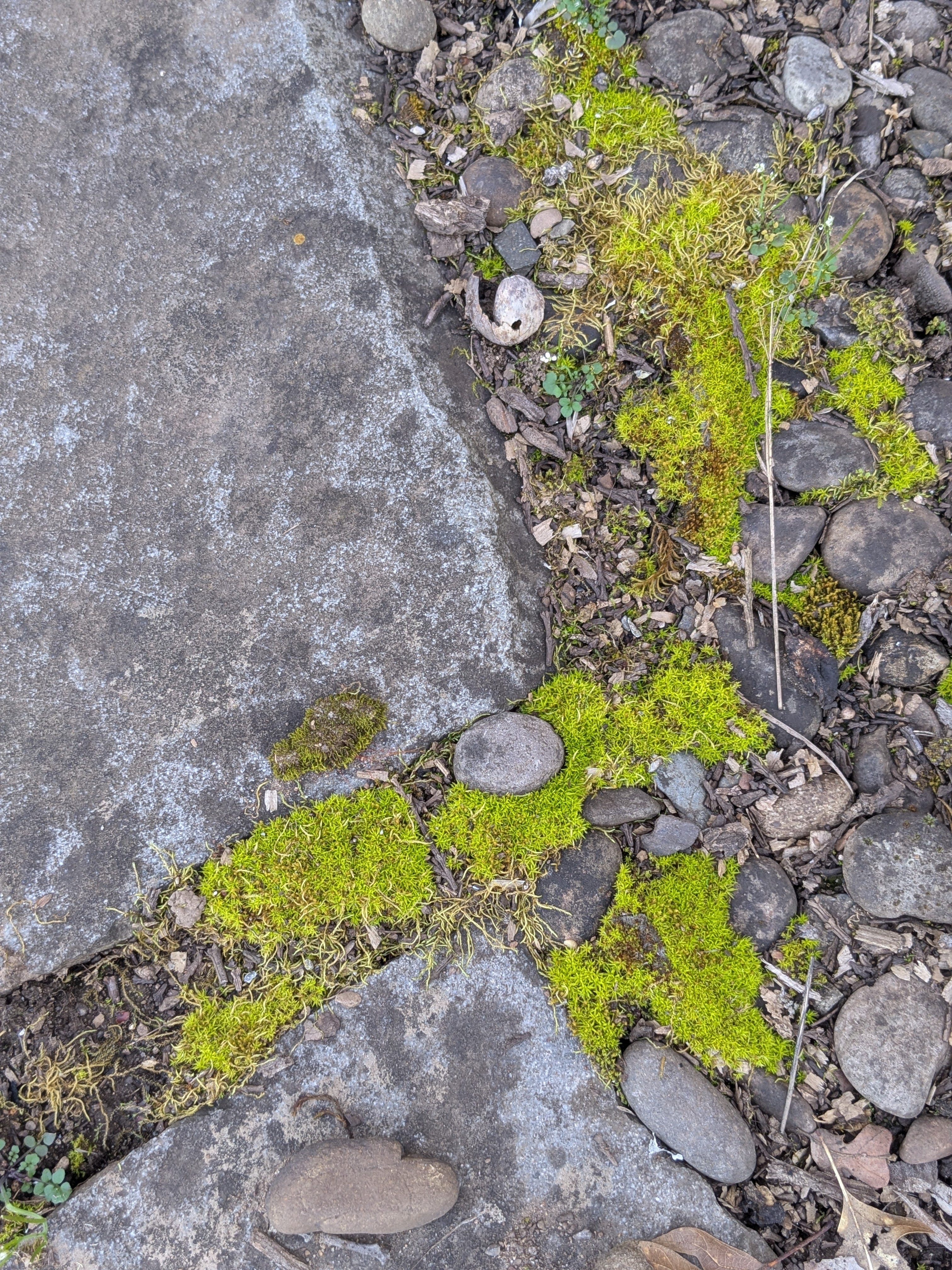
As I try to meditate on the moss, my mind intrudes, and I see a wasteland devoured by the modern robber baron class. They still have the most insatiable appetite to devour everything in their path, mining, drilling, and plundering our sister.
Yet beyond the sanctuary that is my mossy home. The news carries a heavy weight, an erosion of a different kind. Governments are disappearing their own people, reminiscent of Argentina's “ dirty little war”. State-sanctioned theft of childhood through sex trafficking, insurance companies with the motto delay, deny, depose. Looking down at the moss, I have a strange kind of grounding, even a happiness, amidst this existential dread. Biologically, moss is a rebel; unlike trees and other plants, moss goes dormant in the summer, not the winter. It starts to come back to life as the trees start to lose their leaves.
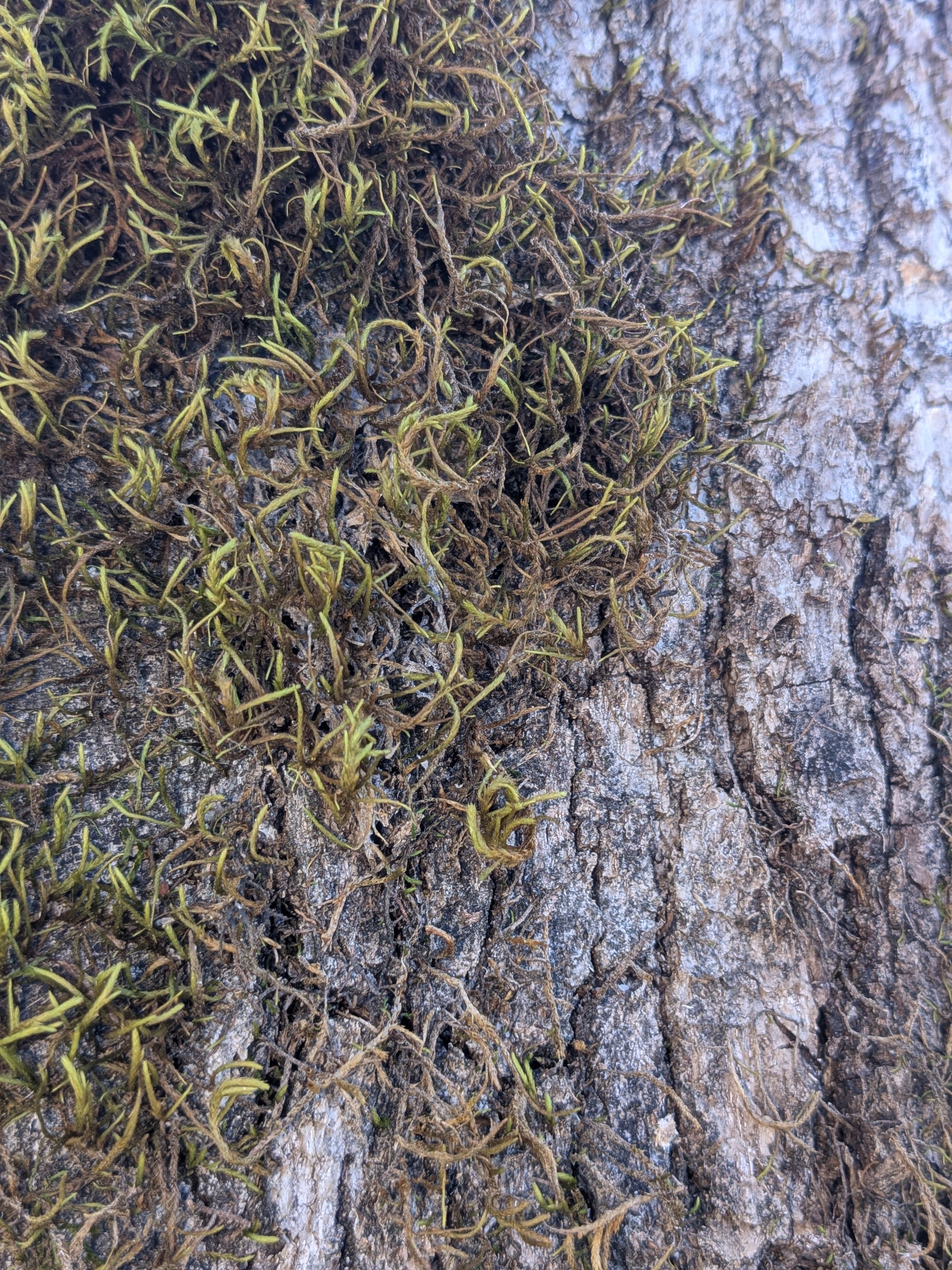
During the carnage of WW1, surgeons would use moss instead of cotton (there was a shortage of cotton) to dress soldiers' wounds. Moss can absorb 20 times their dried weight in water. Some species, particularly Sphagnum moss, can hold 40 times their weight in water, while cotton can only absorb about 13 times its weight. An added benefit of using moss is its antibacterial, antifungal, and anti-inflammatory properties.
I wonder if moss could ever truly absorb the sheer volume of blood that humans have spilled throughout history, or even just yesterday. I want to soak up the rain as the moss does, feeling that sudden dense rush of life. Moss can hold the water, it can hold the blood, but it does not hold the grief and anger. We can't go dormant in the summer; we have to keep absorbing the world around us, for good or bad.
The monopolists of today are no different from their predecessors during the so-called Gilded Age and the Industrial Revolution. Engrossing our planet and our labour for the extraction of resources and unfettered wealth. Sacrifice zones are left in their wake. Environments left depleted, poisoned, and abandoned. The moss on my oak tree might look like a hostile takeover, but it is a companion to the tree, bringing its own assets/resources and benefits. Moss has insulating properties for the tree's bark; it also harbors beneficial insects and the incredible micro animal called a Tardigrade, otherwise known as a water bear. The Tardigades help ensure the health and longevity of the moss colony. It happily swims through the mossy water, eating overgrowth of bacteria and nematodes (tiny worms), keeping everything in balance. Whether the moss is anchored to a boulder or an oak tree, it brings community with it.
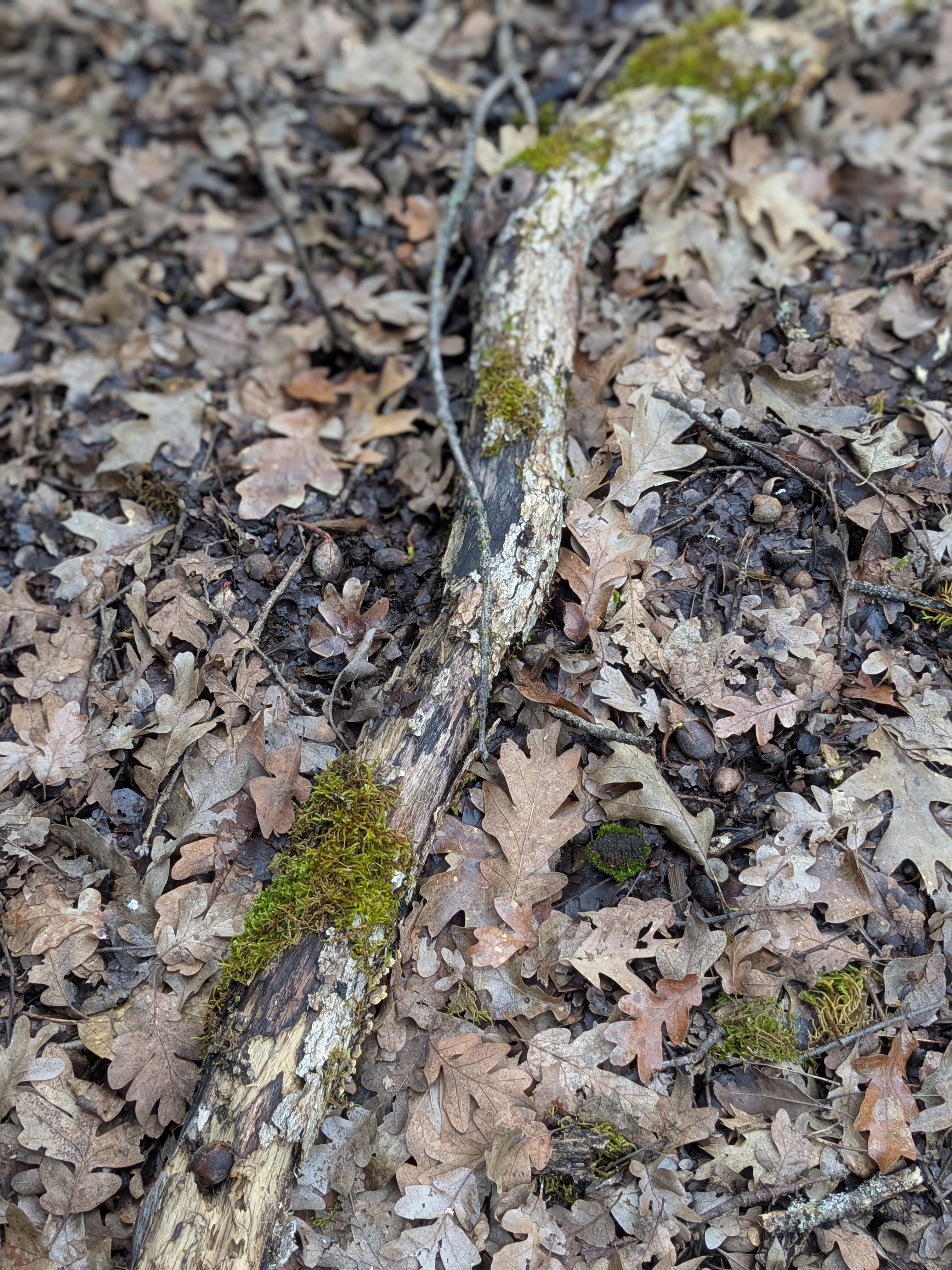
For the oak tree, it is like a lush green fuzzy blanket. Moss is a thermal insulator, helping to regulate the tree's temperature and humidity. Because it can absorb large amounts of rainwater, it slows runoff, preventing erosion at the tree's root system. Some mosses harbour cyanobacteria that fix atmospheric nitrogen, turning it into a natural fertilizer. Unlike big oil, the moss is a carbon vault. Moss locks away carbon that would otherwise contribute to global warming. They are bioindicators. Moss has no root system and can absorb water directly from the air, making it highly sensitive to environmental toxins. If the moss is vibrant and green, it's a good indication of good air quality, but if it starts to brown and disappear its an early warning sign. Its biodiverse nature brings communities together, nesting materials for birds, hunting for spiders, and hibernation for amphibians. Moss creates, diversifies, and shares with the well-being of the wee little Tardigades, from the formidable oak tree to the humblest blade.
As I mentioned above moss do not have roots, they have rhizoids hair or filament like structures that help them anchor itself to a surface it will not harm a living tree, when a tree dies or a limb falls to the grown it creates something call a nurse log creating a nutrient rich moss covered habitat that will allow for new seedling to gown or make a perfect condition for fungi to colonize. However, when moss attaches to a stone, it is a persistent force. It will exert a tiny amount of pressure on microcracks and secrete a mild organic acid. Over the decades, this micro-etching slowly breaks down the hard minerals that will one day become grains of sand and soil.
The efficiency of moss is unmatched. Its leaves are often only one cell layer thick, so tightly packed that they create microscopic channels between them. When only one drop of water falls on the moss, the channels pull it across the entire surface. Most mosses are ecto-hydric, meaning the water moves on the outside surface. Making them unique amongst most other plants that bring their water from their roots to the inside of the plant. Making it much easier to collect water from the air in the form of dewdrops and mist.
When a corporation reaches the end of its life cycle, it usually means liquidation of assets and termination of the workforce until all usable equity is exhausted. And those at the top walk away comfortable and unaffected. While landscapes and the lives of the labourers are left in shambles and ruin. When a patch of moss reaches its end, it does not disappear. It is transformed into a type of soil called canopy soil. All the carbon the moss captured through its one-celled leaves, all the nitrogen it fixed from the air, all the dust it trapped in its capillaries are now condensed into a rich, dark humus for other plants and trees to thrive on. As the Tardigades move through the decaying moss, it spreads microbes and spores, ensuring the next generation of moss ecosystems has the knowledge to build the next community.
Moss is that monumental mutualism. That true community and ecology that we are always striving for, without trying so hard. Its elegant resilience is a silent reassurance, knowing that it has survived for millions of years, weaving itself into the lives of untold species.
The age of capital extraction is found to be wanting, inefficient, sadistic, cruel, and unsustainable. The consortium of mosses slows productivity to gain stability, efficiency, and longevity. A community where everyone's strengths are recognized. Their success becomes synonymous with health, and wealth is seen through a different lens. Moss is a teacher, a home, and can show us a different way to navigate this life. If I get to choose my next life, I would like to reincarnate as moss. I wonder if it knows how important it is to the life of our beautiful blue rock.
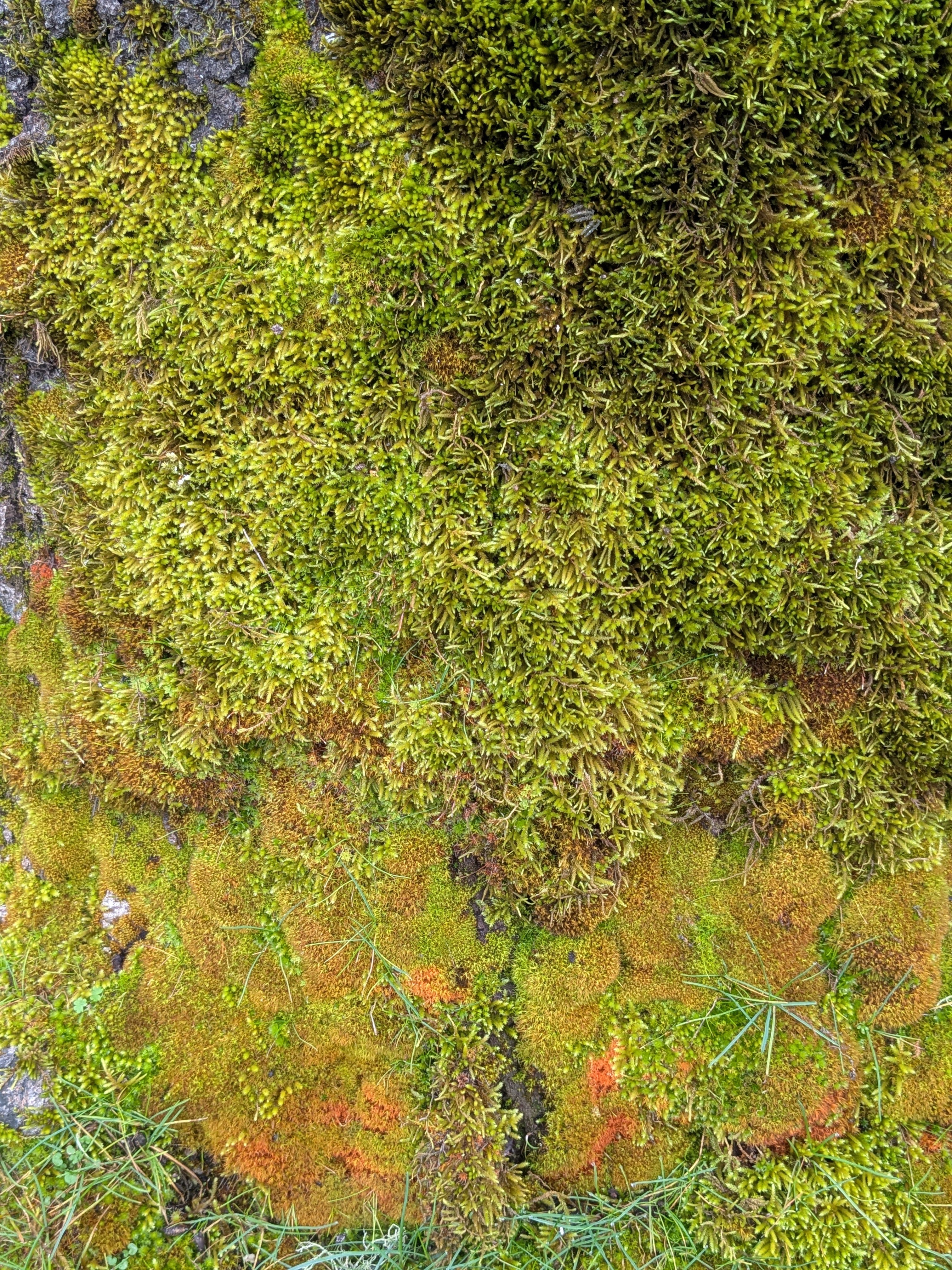
“Nature is not a mother, but a sister; and her laws are our laws.” The book of thoth by Aleister Crowley